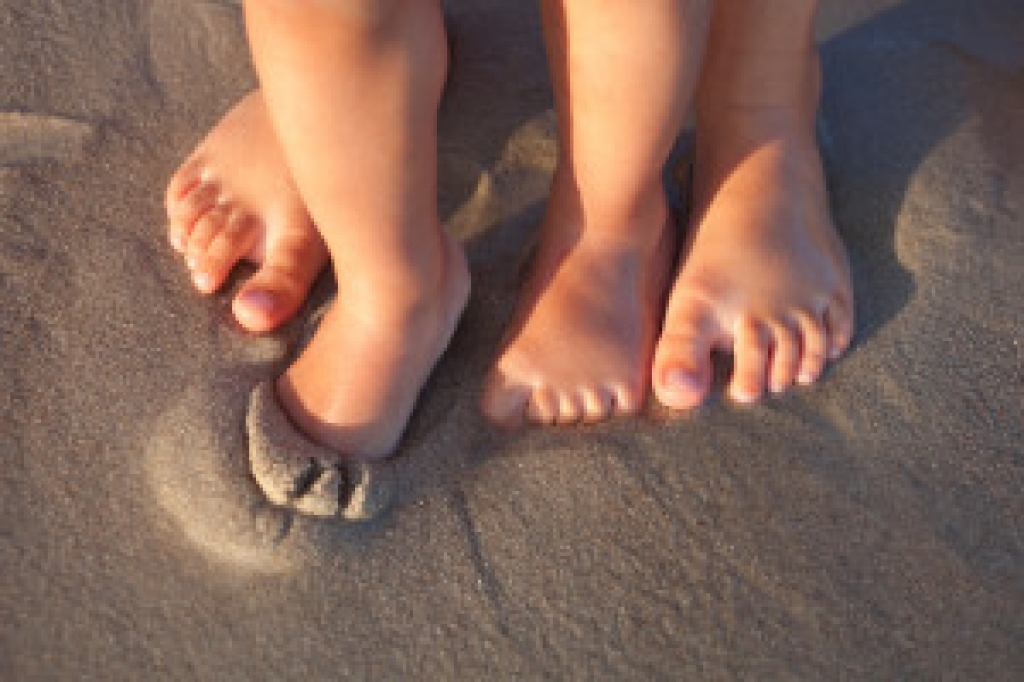
Stages of Children’s Foot Development

Children’s feet grow at different paces, and growth spurts can depend on the age of the child. This is a good reason to measure your child’s feet approximately every two months until they are six years old. When children are born up until the age of two, their feet are generally soft and flexible. During this stage of life, it is beneficial that children have access to different types of surfaces. Their ability to sense different textures is heightened, and foot muscles can begin to develop. Many parents choose to have their children walk barefoot while indoors, and this can help to strengthen the overall foot. When it is time to purchase their first pair of shoes, arch support is not recommended. Shoes that do not have an arch may allow the big toe to naturally extend. Additionally, the remaining toes can help to control the foot as walking is done, and may be harder to do with an arch in the shoe. If you would like to have more knowledge about what kind of shoes to purchase for your child, a podiatrist can give you the information you are seeking. 

Making sure that your children maintain good foot health is very important as they grow. If you have any questions, contact Ambrose Su, DPM of Cascade Foot Clinic. Our doctor can provide the care you need to keep you pain-free and on your feet.

Keeping Children's Feet Healthy

Having healthy feet during childhood can help prevent medical problems later in life, namely in the back and legs. As children grow, their feet require different types of care. Here are some things to consider...

Although babies do not walk yet, it is still very important to take care of their feet.

Avoid putting tight shoes or socks on his or her feet.

Allow the baby to stretch and kick his or her feet to feel comfortable.

As a toddler, kids are now on the move and begin to develop differently. At this age, toddlers are getting a feel for walking, so don’t be alarmed if your toddler is unsteady or ‘walks funny’. 

As your child gets older, it is important to teach them how to take care of their feet.

Show them proper hygiene to prevent infections such as fungus.

Be watchful for any pain or injury.

Have all injuries checked by a doctor as soon as possible.

Comfortable, protective shoes should always be worn, especially at play.

If you have any questions, please feel free to contact our office located in Bend, OR . We offer the newest diagnostic and treatment technologies for all your foot care needs.


Read more about How to Care for Your Child's Feet

Hard and Soft Corns

Corns can cause patients to have severe pain, despite their small size. They can develop as a result of excess friction, which generally happens from wearing shoes that do not fit correctly. A common area where a corn can be found in the side of the pinky toe. The pain can be so severe, that larger shoes may need to be purchased to lessen its severity. Corns that form between the toes are called soft corns, as they are consistently moist from the sweat that is found there. Some patients have corns that form on top of the toes, and this may be from an existing bunion or hammertoe. Patients who have small corns may find mild relief when the foot is soaked in warm water, followed by using a pumice stone that can wear the dead skin away. For more severe corns, it is suggested that a podiatrist be contacted, who can prescribe medicine that may shrink it, or possibly trim it surgically. 

Corns can make walking very painful and should be treated immediately. If you have questions regarding your feet and ankles, contact Ambrose Su, DPM of Cascade Foot Clinic. Our doctor will treat your foot and ankle needs.

Corns: What Are They? And How Do You Get Rid of Them?
Corns are thickened areas on the skin that can become painful. They are caused by excessive pressure and friction on the skin. Corns press into the deeper layers of the skin and are usually round in shape.

Ways to Prevent Corns
There are many ways to get rid of painful corns such as:

  • Wearing properly fitting shoes that have been measured by a professional
  • Wearing shoes that are not sharply pointed or have high heels
  • Wearing only shoes that offer support

Treating Corns

Although most corns slowly disappear when the friction or pressure stops, this isn’t always the case. Consult with your podiatrist to determine the best treatment option for your case of corns.

If you have any questions, please feel free to contact our office located in Bend, OR . We offer the newest diagnostic and treatment technologies for all your foot care needs.

Read more about Everything You Need to Know About Corns

Pregnancy Pressure Points in the Feet

Sometimes during certain pregnancies, a baby may be overdue. This can cause the mother a significant amount of stress. A medical professional may recommend trying to induce labor in the pregnant woman by utilizing acupressure on pressure points on the body. One of these important pressure points actually is located on the feet. It is known as the Kunlun point. Specifically, the Kunlun point can be found in the depression point situated between the ankle and Achilles tendon. Performing acupressure on this point can be done to encourage labor and/or mitigate labor pain. Of course, acupressure might not be a good fit for every pregnant woman. It is always best to trust the advice of a medical professional. If you are pregnant or are planning to be, contact a podiatrist today.

Pregnant women with swollen feet can be treated with a variety of different methods that are readily available. For more information about other cures for swollen feet during pregnancy, consult with Ambrose Su, DPM from Cascade Foot Clinic. Our doctor will attend to all of your foot and ankle needs.

What Foot Problems Can Arise During Pregnancy?

One problem that can occur is overpronation, which occurs when the arch of the foot flattens and tends to roll inward.  This can cause pain and discomfort in your heels while you’re walking or even just standing up, trying to support your baby.  

Another problem is edema, or swelling in the extremities. This often affects the feet during pregnancy but tends to occur in the later stages. 

How Can I Keep My Feet Healthy During Pregnancy?

  • Wearing orthotics can provide extra support for the feet and help distribute weight evenly
  • Minimize the amount of time spent walking barefoot
  • Wear shoes with good arch support
  • Wear shoes that allow for good circulation to the feet
  • Elevate feet if you experience swelling
  • Massage your feet
  • Get regular, light exercise, such as walking, to promote blood circulation to the feet

If you have any questions, please feel free to contact our office located in Bend, OR . We offer the newest diagnostic and treatment technologies for all your foot care needs.
Read more about Foot Care for Pregnant Women

What Are Hot Spots and Blisters?

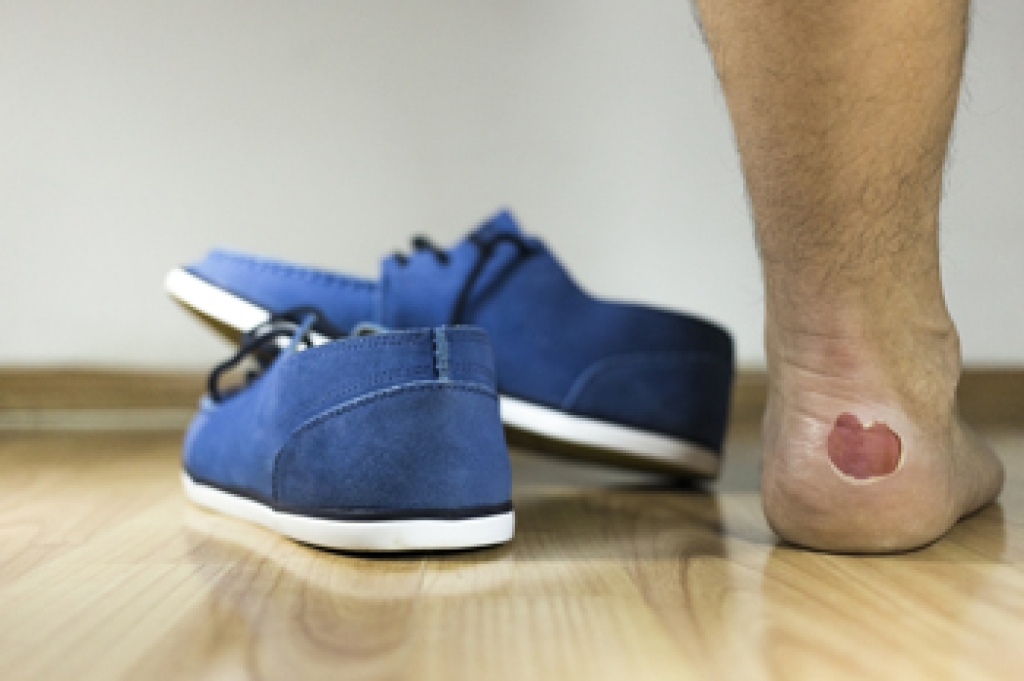
Blisters, as many individuals might already know, are bubble-like areas of skin that can develop on the feet in response to friction. When an individual develops a blister, sometimes the blister can make engaging in physical activities difficult or uncomfortable. Anyone serious about preventing or treating blisters ought to be aware of what “hot spots” are and how they are related to blister formation on the feet. Essentially, hot spots are the first symptom of a blister, and they can indicate that a blister is about to form. Hot spots are more or less self-explanatory; they are areas of the feet that are hot and can feel significantly irritated. If you feel a hot spot on the feet developing, then this might indicate that a blister is on the way. Typically, when an individual feels a hot spot developing, they must address the problem to prevent a blister from forming. If you are someone that already has a blister or feels a hot spot on their feet, schedule an appointment with a podiatrist today. 

Blisters are prone to making everyday activities extremely uncomfortable. If your feet are hurting, contact Ambrose Su, DPM of Cascade Foot Clinic. Our doctor can provide the care you need to keep you pain-free and on your feet.

Foot Blisters

Foot blisters develop as a result of constantly wearing tight or ill-fitting footwear. This happens due to the constant rubbing from the shoe, which can often lead to pain.

What Are Foot Blisters?

A foot blister is a small fluid-filled pocket that forms on the upper-most layer of the skin. Blisters are filled with clear fluid and can lead to blood drainage or pus if the area becomes infected.

How Do Blisters Form?

Blisters on the feet are often the result of constant friction of skin and material, usually by shoe rubbing. Walking in sandals, boots, or shoes that don’t fit properly for long periods of time can result in a blister. Having consistent foot moisture and humidity can easily lead to blister formation.

Prevention & Treatment

It is important to properly care for the affected area in order to prevent infection and ease the pain. Do not lance the blister and use a Band-Aid to provide pain relief. Also, be sure to keep your feet dry and wear proper fitting shoes. If you see blood or pus in a blister, seek assistance from a podiatrist.

If you have any questions, please feel free to contact our office located in Bend, OR . We offer the newest diagnostic and treatment technologies for all your foot care needs.

Read more about Blisters

Connect With Us